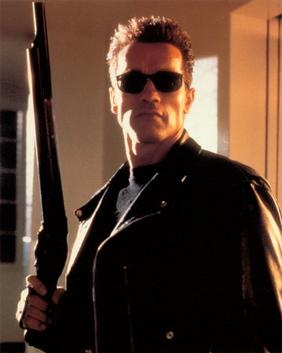
If a film adaptation The Jungle By Upton Sinclar were to be made, how would that piece of film look like? Well the story itself has a feeling of grittiness and sadness. Makes me think of the first Rocky film and how that movie was filmed with certain grittiness and sadness. Obviously in this adaptation it would be based in the early 20th century. I feel like 1980’s Arnold Schwarzenegger would my choice to play Jurgis. Jurgis presents himself as this macho man figure, no matter the condition he’s in he gonna tough through it because he’s a man and has to care for his family. I feel like Arnold in the eighties was the embodiment of macho. I also find it an interesting juxtaposition as Jurgis and his family came over to Chicago in hopes of a better life, living the “American Dream” whereas Arnold is someone who is also a European immigrant who came over to America to chase that dream, and achieved it to the highest level. As for Ona, I feel that Florence Pugh would be great for that role. Ona is described as a beautiful woman who is very feminine, and complete 180 contrast from Jurgis tough masculinity. The movie would still be placed in Packing Town and would be shot in complete Black and White, to fit the time.
“Hark! was it music, or the hurry and shouting of men? Yes, surely! Clear and high the faint sweet melody rose and fluttered like a living thing, so that the very earth trembled as with the tramp of horses and murmur of angry men.” (XIII. Of the Coming of John)
In this moment, John is confusing the trample of horses as something that is alive to a melodic rose. The fluttering strikes me as the most distinct part of this metaphor. Living things that flutter aren’t horses, they are usually butterflies or something more delicate. However, when thinking about the language used, one’s heart can flutter when excited, nervous, or fearful. So at this point, John’s heart is fluttering but also recalling his most fond memory of the theatre. It is described almost like a near death experience in the sense that John is essentially dissociating from his current circumstance: death by lynch mob. I felt like this passage perfectly encapsulates the struggle that black men faced at this time. Even someone as educated as John is facing the end of his life because of a lynch mob. The whole story up to this point is to emphasize the tragedy that is happening. John was doing something most people would consider the right and just action of defending his sister from assault, but in defending her he sealed his own fate. This highlights the inequality in the eyes of the law that Black people faced constantly, and DuBois was trying to highlight in the south particularly. In this sense, Black people were not joining America or becoming citizens. They were being hunted down for any and all excuses during the Nadir.
[NOTE: Because we have a shorter week, a comment reply AND a blog post are due by class Feb 24. To see more of these details, go to the class date in our “Course Schedule”on Cuny Commons”]
This week, I am offering a short video providing an overview of one of W.E.B. Du Bois’s major arguments in The Souls of Black Folk focusing on “the color line,” “double consciousness,” and “the veil.”
Here is the 3 min video:
Summary or key points of the video:
“The Colorline” and “the veil” are both metaphors, forms of figurative language that make comparisons to describe the Black experience in America.
The video takes ideas from The Souls of Black Folk and describes their meaning through the figure of a Black single mother who is also an executive. (I have some reservations about the creator making the contemporary figure specifically a single mother because it makes assumptions about the formation of the Black family, but it still demonstrates how we might use these concepts today).
Comment Reply Questions (choose ONE and write 2-3 sentences as ):
All that said, for the first comment reply option, draw upon the video and the reading and consider:
How might “double consciousness” or “the Veil” be useful terms for thinking not only about the Black experience but other American experiences? Or how might Du Bois’s argument be useful for other groups or other challenges in American soceity?
***
Another key aspect of The Souls of Black Folk is that W.E.B. Du Bois includes selections of music before each chapter, which he refers to, in the final assigned chapter, as “the sorrow songs,” or songs sung by slaves during slavery and black people after emancipation. In this way, even though Du Bois’s work is written, it includes other mediums, the medium of music.:
2. What does the incorporation of music in The Souls of Black Folk signify, or what additional meaning does it add? To answer this question, you may consider the following passage from “The Sorrow Songs”:
“They that walked in darkness sang songs in the olden days—Sorrow Songs—for they were weary at heart. And so before each thought that I have written in this book I have set a phrase, a haunting echo of these weird old songs in which the soul of the black slave spoke to men. Ever since I was a child these songs have stirred me strangely. They came out of the South unknown to me, one by one, and yet at once I knew them as of me and of mine…Out of them rose for me morning, noon, and night, bursts of wonderful melody, full of the voices of my brothers and sisters, full of the voices of the past” (Du Bois, Chapter XVI).
HINT and Historical context:
In responding to this question, you may want to consider how literacy was outlawed for slaves in America. In other words, it was a crime for enslaved people to learn and for anyone to teach an enslaved person.
If you are unfamiliar with slave law history (escaped slaves were actually supposed to be returned to their owners by any white citizen who found them in the north; laws against gathering in groups of more than three; laws against traveling on the road without a note, etc) check out the video below:
If you are unfamiliar, watch this video (about 9 mins) to learn more about slave laws. (Note that W.e.B.Du Bois is writing after slavery, which was abolished in 1863, but the laws and social customs still have an impact in 1903 when Dubois publishes his landmark text):
***
3. Recall class on February 16 focused onThe Jungle Chapters 22-22, 26 to the end. In class, we discussed how Upton Sinclair describes the “Negro” or Black strikebreakers (you may also refer to them as African Americans). They are dehumanized and often seem like animals, a disease, or sinful. (If you need a review of these points, check out the Google slides for this session linked here “Strikes, Scabs, Sexwork, and Socialism”)
3. Compare Upton Sinclair’s depiction of Black of strikebreakers to W.E.B. Du Bois’s introspective question, “How does it feel to be a problem?” What do you notice?
To answer this question, here is one of the passages describing the black strike breakers in The Jungle:
“We] might see brawny negroes stripped to the waist and pounding each other for money, while a howling throng of three or four thousand surged about, men and women, young white girls from the country rubbing elbows with big buck negroes with daggers in their boots, while rows of woolly heads peered down from every window of the surrounding factories. The ancestors of these black people had been savages in Africa; and since then they had been chattel slaves, or had been held down by a community ruled by the traditions of slavery. Now for the first time they were free—free to gratify every passion, free to wreck themselves. They were wanted to break a strike, and when it was broken they would be shipped away, and their present masters would never see them again; and so whiskey and women were brought in by the carload and sold to them, and hell was let loose in the yards. Every night there were stabbings and shootings; it was said that the packers had blank permits, which enabled them to ship dead bodies from the city without troubling the authorities. (Sinclair, Chapter 26)”
and here is the passage from “Of our Spiritual Strivings” in The Souls of Black Folk:
“Between me and the other world, there is ever an unasked question: unasked by some through feelings of delicacy; by others through the difficulty of rightly framing it. All, nevertheless, flutter round it. They approach me in a half-hesitant sort of way, eye me curiously or compassionately, and then, instead of saying directly, How does it feel to be a problem? they say, I know an excellent colored man in my town; or, I fought at Mechanicsville; or, Do not these Southern outrages make your blood boil? At these I smile, or am interested, or reduce the boiling to a simmer, as the occasion may require. To the real question, How does it feel to be a problem? I answer seldom a word (Du Bois, Chapter I).”
“It was subletting, and the conditions of the homes that people were living in, that caught the attention of health officials and reformers. Reformers, who were mainly middle-class, were the ones wanting to change the conditions that the poor, working-class were living in. They joined movements that involved several aspects of change, including regulatory legislation, and erecting good-quality, low-rent dwellings that could help the situation”
As seen in the quote above from Urban History. It is very easy to connect the truth of the novel to real accounts of housing conditions the people of Chicago were experiencing. As stated in this article, many of the families that were already renting cramped houses started to rent portions of their own home in order to gain more income and pay their bills. This other known as Subletting, meant that their family would house another entire family to live in their home in order to be close to the city and get to work on time the next morning. Like in the novel, The Jungle, Jurgis’ family had barely enough to get by and sacrificing a portion of one’s home to gain extra income would be anyones first thought during these times. As stated in the quote, the middle class people of Chicago saw what was happening and decided to join movements to help the working class people that were struggling. Towards the end of the novel it can be seen that many workers also started to dislike their working conditions and went on strike in hopes to make a difference in the work place. Sinclair did a great job implementing real accounts to The Jungle in order to promote change and to hopefully make a difference for the working class and the general public.
“[T]he meat would be shoveled into carts, and the man who did the shoveling would not trouble to lift out a rat even when he saw one—there were things that went into the sausage in comparison with which a poisoned rat was a tidbit. There was no place for the men to wash their hands before they ate their dinner, and so they made a practice of washing them in the water that was to be ladled into the sausage. There were the butt-ends of smoked meat, and the scraps of corned beef, and all the odds and ends of the waste of the plants, that would be dumped into old barrels in the cellar and left there. Under the system of rigid economy which the packers enforced, there were some jobs that it only paid to do once in a long time, and among these was the cleaning out of the waste barrels. Every spring they did it; and in the barrels would be dirt and rust and old nails and stale water—and cartload after cartload of it would be taken up and dumped into the hoppers with fresh meat, and sent out to the public’s breakfast.”
But still she clung to him, wailing aloud in her despair: “Oh, Jurgis, think what you are doing! It will ruin us—it will ruin us! Oh, no, you must not do it! No, don’t, don’t do it. You must not do it! It will drive me mad—it will kill me—no, no, Jurgis, I am crazy—it is nothing. You do not really need to know. We can be happy—we can love each other just the same. Oh, please, please, believe me! – Chapter 15 pg.177
– this shows her apprehension on wanting to admit the truth of her sexual assault because she wants to protect not only her job but also her husband’s job. She is aware of the power that her boss has over her family as the consequences can snowball and lead to a life of poverty and homelessness. The decision of speaking up for her safety does not take priority for her as she cannot make decisions for herself as they will immediately affect her family.
Passage 2:
He tried to persuade his father to have nothing to do with the offer. But old Antanas had begged until he was worn out, and all his courage was gone; he wanted a job, any sort of a job. So the next day he went and found the man who had spoken to him, and promised to bring him a third of all he earned; and that same day he was put to work in Durham’s cellars
Chapter 5.
This quote specifically speaks on how gender ideals coincided with a man’s role in a family. Antanas felt like he was not worthy of being a man of the family if he couldn’t provide the same way that Jurgis does. His ego would be hurt if he stops working, he would feel as if in some way he is disappointing the family despite Jurgis’ efforts of wanting to be the “man of the house.” Antanas’ decision which ultimately led to his death could have been prevented if he didn’t feel the intense need to prove himself as a man that society deems as worthy of respect.
All these things were going on now, and the family was helpless with dismay. So long they had toiled, and such an outlay they had made! Ona stood by, her eyes wide with terror. Those frightful bills—how they had haunted her, each item gnawing at her soul all day and spoiling her rest at night. Chapter 1
This quote elaborates on how Ona could not enjoy her own wedding night due to her family taking advantage of the event and piling up her bills. Despite her love for family this creates obvious inner turmoil as she wants her wedding to be a great escape for not only her but her family. Sadly, her love for her family costs her an accumulation of stress and debt, limiting her joy on her special night.
Feb 9, we are signing up for “Welcome to the Week Presentations.” You will have time in class today. After today I will sign people up who are missing. If you do not like or want that slot, you must reach out to a peer to exchange it and notify me.
In class, using the following Google slides presentation for “Welcome to the Week” for The Jungle (5-10; 10-20), in groups, we will find 3 passages focussed on family in the text, namely how it can inspire and motivate and how it can become a burden. OR consider how Packington or the meat packing industry uses workers and what happens to workers bodies.
In groups of 3-4
Choose 1-2 scribes; 1-2 passage searchers; include all names first and last at the beginning of your post.
Consider how keeping the family together, and family relations inspire the group; what (specifically) are the ways family becomes a burden? Or Consider how and why the meatpacking industry uses workers. What is the logic for the industry? For workers?
For one peer with internet access, write a few notes or summarize your group’s thoughts about family.
Find and cite 3 passages for the ebook that reflect or connect back to your thoughts about family. At least ONE passage needs to be from chapters 5-10 or 15-20.
With each passage, explain how it relates back to your explanation of family or people in the meat packing industry.
There are different ways to create a video for “Welcome to the Week” (you can also write a blog and incorporate text and images if video is not your preference). In this blog post, I explain how to create a video using Google slides and Zoom’s screen share function, record it on Zoom and save it to your desktop, and upload the video to Youtube. I also suggest using youtube studio to help edit the video, if you so choose.
Creating Content for the “Welcome to the Week” Video (using close reading, cultural context, and images in Google Slides)
As you read the text that you are presenting on/ discussing, keep a word doc open so that you can copy and paste passages that interest you. You need at least 2 for full credit.
Cite the chapter or paragraph for shorter essays or lines for poetry for reference. Note the context or summary so that when you describe or read the quoted passage, you provide readers/viewers with a sense of where the quoted passage comes from.
Take notes on the patterns, connections, or alternative discrapncies or really stark differences across the reading, ideally as they relate to your selected passages. You may define and note certain literary devices or recoccruing themes. You also may connect to other texts that we have read.
Develop at least 3 questions based on your close reading notes OR based on cultural and historical context or contemporary parallels (e.g. similarities to our culture and society today).
After you take your notes and decide your questions, you are ready for Google Slides or Powerpoint.
In Google slides, create a title page that indicates what pages or text you are discussing and a subheading that reflects your points of focus.
With passages, try to have a font at least 15pts, so that it is easier for people to read and cite.
With questions, put them on separate slides.
Try to include 2-3 images (they can be directly related to the text and content or tools to highlight your points)
Include citations for resources (Or include links in your blog post).
Alternatively, if you do not want to record the video, use the same points above to create a blog post, but instead of slides, create subheadings in your blog post indicating themes, passages, and questions you want people to respond to. You are still encouraged to include 2-3 images, and you can hyperlink or “Command +K” resources, references, or points of interest.
Open your Google Slides presentation in a browser tab.
Select Share Screen on the Zoom menu bar.
In the Zoom screen sharing window, select your Google Slide presentation.
In Google Slides, select Slideshow on the upper right side of the menu bar. Your presentation opens in full screen and is shared with meeting participants. Meeting participants only see the presentation. Exiting full screen allows participants to see your browser again.
Drag the Speaker Notes page to a different screen if you don’t want it to be shared.
Instructor preferred approach (e.g. how she does it): To present in Presenter view with speaker notes, select the dropdown arrow next to the Slideshow button, then select Presenter view. Your presentation starts. Speaker Notes open in a new window.
To stop sharing your screen select Stop Share.
If you would like a full screen presentation, print out your speaker notes and follow the instructions on how to share your screen without speaker notes.
Screen Share with Powerpoint
Open the PowerPoint file you want to present.
Start or join a Zoom meeting.
Click Share Screen in the meeting controls.
Select your monitor then click Share.
(Optional) On the meeting controls menu, hover over You are screen sharing, then click the drop-down arrow , to view the screen shared with your participants. To stop viewing the screen shared, click the up arrow .
Switch back to Powerpoint and click the Slide Show tab.
Begin the presentation by selecting the Play from Start or Play from Current Slide options.
The green border indicates the monitor you are currently sharing.
Recording “Welcome to the Week” on Zoom
Once you have completed the slides, you are ready to talk/walk us through your “Welcome to the Week” for a short video.
Suggestion: Take pauses between sections while recording. It makes it easier to edit later. You can edit them out later on Youtube studio OR pause between sections while you go through the slides.
Here is a short video (3 mins) on how to record and pause in Zoom:
Local Recording saves your recording files on your computer. It is not possible to upload a local recording to the Zoom cloud. To store a video on Zoom’s cloud, you must use cloud recording.
However, you can share your local recording with others by uploading it to a third-party cloud storage or content/learning management platform such as Dropbox or Google Drive.
Note: We recommend you use a unique file name when saving or sharing meeting files, and that you do not use the words Zoom, Personal Meeting Room or My Meeting in the file name.
How to share a local recording
To locate the recording files on your computer:
Sign in to the Zoom desktop client.
Click the Meetings tab.
Click the Recorded tab.
Select the meeting you would like to view the recording for and click Open.
This will open the folder where your recording files are stored. The MP4 file is the video file. Note: If you only see the Open button, the meeting contains a cloud recording.
How to upload your to Youtube to create a Youtube link for the “Welcome to the Week” Blog post
Youtube makes sharing video and audio files easier because they easily embed into our blog posts on the CUNY Commons (or any WordPress) platform. YouTube is a free video cloud storage and streaming service from Google. Users will need to create a free, verified Google account in order to upload videos that are 15 minutes or longer in duration.
Look below for a quick step-by-step guide on how to upload a MP4 file to YouTube. For additional information, visit the YouTube Help Center Guide: Upload Videos.
The YouTube home page will launch; select the Create button [camera icon] > Upload Video link in the upper right-hand corner.
A window will display that will allow you to either Drag and Drop the MP4 files you wish to upload or Select Files from your computer or external storage device.
YouTube allows users to upload up to 15 videos at a time; be sure to click the Edit button [pencil icon] on each file to add your video details. If you close the upload experience before you finish choosing your settings, your video will be saved as a draft on your Videos page.
2. Add Video Details
Once your video file(s) have begun to process, you will be asked to provide basic information about the video and audience visibility.
Details
Title – Insert a title for your video. This field is required, and best practice is to list the name of the class and meeting date. (For example: “MATH-1324-050 | 10/13/2020 Class Meeting”)
Description – This will display below your video, and it is optional.
Thumbnail – This is the image viewers will see before clicking your video. If you do not select a thumbnail (or choose to upload a thumbnail image), YouTube will automatically select one for you.
Playlists – Add your video to one of your existing playlists, or create a new playlist. Best practice is to create a playlist for each of your courses to help keep your videos organized.
Audience – To comply with the Children’s Online Privacy Protection Act (COPPA), you’re required to tell YouTube whether your videos are made for kids.
Age Restriction (Advanced) – Age-restrict videos that may not be appropriate for all audiences. For most classes, you can skip this section, or check the “No, don’t restrict my video to viewers over 18 only” radio button.
Here is a video walking through the steps of uploading your zoom recording to Youtube. There are a few steps, though, you will not copy from the video:
Do not choose to accept money for the video
You can choose to make the video “Public” or “Unlisted,” which means we will only be able to access it by clicking on the link you provide or by watching the embedded video in your post.
. You do not need to choose an image for your thumbnail (Youtube will select one from random from the video content)
Need help with the Commons?
Email us at [email protected] so we can respond to your questions and requests. Please email from your CUNY email address if possible. Or visit our help site for more information:


 or “Command +K” resources, references, or points of interest.


 in the meeting controls.
 , to view the screen shared with your participants. To stop viewing the screen shared, click the up arrow
  .
.