A couple of weeks ago, I went on a trip with the class to the Puerto Rican Traveling Theater to watch the play Quarter Rican. The play was about a man named Daniel, who is a young father and is struggling with the identity of his child, while dealing with his own identity issues. He struggles with his own perception of what it means to be a Puerto Rican kid living in a city that has changed and been gentrified. He comes to the realization in the end that what really matters is the kind of person you are. I feel that the issue of identity is something that many people struggle with, especially as cultures become more mainstream and integrated in our world. The struggle of what culture you belong to or if you meet some pre requisite to “fit in” is something that is still prevalent in people to this day, regardless of age or gender. However, the more important thing that should be focused on more than anything is the quality of how good a person is,
Author: Kevin Perolli
Welcome To The Week- The 1969 CUNY Protest
Q1: If the administration noticed that there was an uprise, what if any moves did they take to address this situation?
“There are a number of signs that indicate that the college administration just might be awake to the possibility of impending blow-up and may be, at this very moment, attempting to initiate cooling off or even reformist projects”
I find this interesting especially based on the quote, which indicates that they knew that people in the administration were aware that an uprising was happening. It is interesting to me if they did anything to address it before the protests. If it was obvious that something was in danger of happening, why wouldn’t they do something to address the tension that was being shown by the students?
Q2: How much did mainstream culture play in how the culture of rebellion and protest like the CUNY protest?
“The mainstream American culture is riddled with too much duplicity (land of the free and home of the brave on the one hand— discrimination, injustice, lynchings on the other), too much illusion (the multiracial melting pot myth of the one hand—conflicting and often antagonistic racial, national, ethnic clusters on the other), too much political evasiveness to be merely studied.”
The effect that the media has on people is something that is felt even to this day. What makes me more curious about this question was the media and how it was consumed was different as compared to today. It traveled slower, and most people believed whatever was fed to them. This tells me that people were aware of the disparities in our society and not falling for the facade that the media would try to portray, how much of that fueled protests and riots of that time period?
Q3: Had CUNY not made the changes it made at this time, how do you think the demographic of Cuny would differ from today?
Its a question that really makes you think about the long term effects of protests, more inclusion and diversity is definitely a plus, but it does make me wonder had nothing been done, what would’ve happened to CUNY? What would the faces of the school be and how much different would the culture be had things been slower to change?
The Souls of Black Folk: Defining Freedom Through Literary Devices
The Souls of Black Folk by WEB Du Bois was written as a wake up call for African Americans living with the struggles and dangers that arose in a Post Civil War America, to get them to fight back and demand more change for the sake of their future. His words were that of inspiration, as in the reconstruction period of America there was a great rise in hate groups like the KKK, as well as lynching. It was a tumultuous time as even though African Americans were promised and held to to this hope of Freedom with the abolishment of Slavery, the world showed them otherwise. As he said himself, “We have no right to sit silently by while the inevitable seeds are sown for a harvest of disaster to our children, black and white.” This sentence encapsulates the thoughts that many African Americans had sat with and thought about, and lines like this were designed to get them to see the situation their in an essentially challenged them to change it.
Blog Post on The Jungle Using Historical and Cultural Resources
The Jungle, written by Upton Sinclair is based in the early 20th century in Chicago. It depicts the harsh realities and conditions that many immigrant workers had to deal with in coming over to America. It talks about the journey of Jurgis Rudkus who came over with his family from Lithuania to America. They moved to a town called Packing Town in Chicago, I think the depiction of the city is the biggest cultural resource used. The vibe and environment of the city encapsulates what life was like in the 20th century. The conditions that the men faced in those meat packing factories was something that very few people knew about, and the ones who did, didn’t feel bothered to do anything about it. It sheds a strong light on the health and safety of workers and how poorly they were treated. More importantly, I feel, it talks about the experiences and trials that immigrants had to face, deconstructing the false hoods of the American Dream and painting a grimmer and more harsh truth.
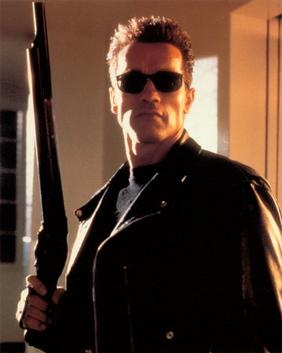
The Jungle Cast


If a film adaptation The Jungle By Upton Sinclar were to be made, how would that piece of film look like? Well the story itself has a feeling of grittiness and sadness. Makes me think of the first Rocky film and how that movie was filmed with certain grittiness and sadness. Obviously in this adaptation it would be based in the early 20th century. I feel like 1980’s Arnold Schwarzenegger would my choice to play Jurgis. Jurgis presents himself as this macho man figure, no matter the condition he’s in he gonna tough through it because he’s a man and has to care for his family. I feel like Arnold in the eighties was the embodiment of macho. I also find it an interesting juxtaposition as Jurgis and his family came over to Chicago in hopes of a better life, living the “American Dream” whereas Arnold is someone who is also a European immigrant who came over to America to chase that dream, and achieved it to the highest level. As for Ona, I feel that Florence Pugh would be great for that role. Ona is described as a beautiful woman who is very feminine, and complete 180 contrast from Jurgis tough masculinity. The movie would still be placed in Packing Town and would be shot in complete Black and White, to fit the time.

