Author: Michael Y Skrypnyk

Quarter Rican Play Reflection

My, my, where do I even start? The Quarter Rican was by far the most unique play I’ve ever been to.  The sounds, the lighting, the set design, it was all such an amazing experience. Courtesy of the Puerto Rican Traveling Theater, just off the side on 47th street and 8th avenue, nestled right into the Theater District. It looks so nice and cozy on the outside, and it gets even better on the inside. It used to be a firefighter station, but got closed down soon after, which definitely explains how so much can fit into what I initially thought was a repurposed apartment building.
Anyway, back to the play. It follows the story of a half Puerto-Rican man named Danny, who is concerned about his son’s future, who happens to be, Quarter Rican. He worries about how he can teach his son about his heritage without forcing it onto him, so that his child knows his roots and knows his culture. And throughout the entire show he is reassured that he will be fine, creating his own, “Puerto Rican starter kit” from which he will draw upon once his baby grows older than one and so.
I love the lesson that Quarter Rican teaches about identity, about not being afraid to be yourself and not being afraid of passing on the culture running through your blood and soul. I love how freshly it depicts the struggle of being different and having to live with it, and making the most of it, for yourself and for your children. I love the musical numbers, “La ballada de Pablo” being one of my favorites, though to be honest, they were all great. I also loved how on the wall behind the entire show were captions, but they were in the opposite language the people on stage were speaking. If they were speaking English, the captions were Spanish, and the other way around. That’s so cool.
This play was so great to see.

The stage itself.
The stage itself.
A mini museum we passed by going up to the balcony.

Class Trip to the Tenement Museum

On our class trip to the Tenement Museum, we had dived into the well-preserved life of the Levines, who at that time would have been no one special. Just another family stuffed into an apartment on Orchard Street, all 7 of them in various stages of development. Funny enough, there were exactly seven of us who managed to make it to the tour, so we got an accurate depiction of what it would be like stepping over one another trying to get to each vantage point. I was completely enamored with every tiny detail, from the cloths from where two hired girls would sew and prepare frills and lace for dresses, to the repurposed barrels and crates for what I’m pretty sure were biscuits, to the little table which contained breads and jars and kettles, and a little book on if memory serves was a government handbook of some sort, sorry if not. But above it all I loved how I could stand in the midst of all the relatively peaceful proceedings of everyone observing what they were, and imagine just how loud it would’ve been in this little place. Between the sounds of the treadle sewing machine, the sounds of the stalls and haggling and the buying just outside the window in the street below, the sound of a mother cooking food, a child frustrated in their crib, it all coalesces into an image I can’t help but not love. It was a life for them, and for them it worked out.

Also I can’t not help but mention this. So, at I think 1902, the price of kosher meat was raised to an uncomfortable amount, and many Jewish wives went out into the streets to protest. Notable events included someone throwing a brick through a butchery window and a police officer slapped in the face by a piece of meat, that I think was beef.

All the material to be worked on.
Sewing station back then.
Sewing station back then
A seat or just something to place stuff on ... courtesy of ... Peerless Biscuit Company
A seat or just something to place stuff on … courtesy of … Peerless Biscuit Company

The Museum of the City of New York and the Overlapping of Change

On the class trip to the Museum of the City of New York, I found myself in awe that this city had so much history packed into it, a history of change, of people fighting for better lives. What I noticed was that each exhibit (which mind you all of which was neatly organized into one single room) had a tablet on which was written a timeline of each major event to happen for each and every movement, or series of changes. What struck me about that was that as we went further and further into the exhibit, all these timelines began to overlap. They began to overlap more and more and more till the point where I began to imagine all these people fighting for their rights, for justice, and for everything they needed, they fought shoulder to shoulder in the annals of history. And more likely than not they probably did. They probably did go to support each other at their protests. They probably did have common interests because more rights for one means that there is precedent for another to receive their own. And upon such an avalanche of progress we have, we are, and we will continue to push for a better future for everyone. I hope.
Also, I will add that the tour was such an amazing experience, I learned so much and that I would love to go see their other tours if I find the time.

Malcolm X and Yuri Kochiyama, who both fought for civil rights and collaborated many times throughout their public careers.
Sorry for the camera angle.

Allen Ginsberg’s Howl

Does Ginsberg seem hopeful that change will happen and does it seem the people he describes are harbingers of such change?

“who reappeared on the West Coast investigating the FBI in beards and shorts with big pacifist eyes sexy in their dark skin passing out incomprehensible leaflets,
who burned cigarette holes in their arms protesting the narcotic tobacco haze of Capitalism,
who distributed Supercommunist pamphlets in Union Square weeping and undressing while the sirens of Los Alamos wailed them down, and wailed down Wall, and the Staten Island ferry also wailed,”

Ginsberg describes, in a few lines of the first part of Howl, a mention of people protesting. I see it as a shred of organization amongst all the crazy happenings going on around, of whatever, if I may call it madness, was occurring simultaneously. People still went out and protested for what some might have thought would be madness to even consider ever becoming a reality. And who knows, maybe the right amount of madness is the key to everything.

What do you think Ginsberg is trying to depict through the visage of Moloch? Something specific, or something bigger?

In the second part of Howl, Ginsberg switches styles on a dime, or at least seems to. For in his words still lie a madness, but it is instead wrapped around this Moloch, who seems to encompass so much that is wrong, so much that is antithetical to the people that he just described in such vivid detail. In fact this reminds me of a film I watched earlier in the semester, called Metropolis, a German expressionist film released in 1927, which also depicts a reference to Moloch, in the form of a hallucination of the engines of a massive city being transformed into a sacrificial pyre, its workers being led into the burning maw. In fact, I believe that scene actually influenced Ginsberg in his creation of Howl.

Does Ginsberg seem to call for peace or for further madness?

“I’m with you in Rockland
   where we hug and kiss the United States under our bedsheets the United States that coughs all night and won’t let us sleep
I’m with you in Rockland
   where we wake up electrified out of the coma by our own souls’ airplanes roaring over the roof they’ve come to drop angelic bombs the hospital illuminates itself    imaginary walls collapse    O skinny legions run outside    O starry-spangled shock of mercy the eternal war is here    O victory forget your underwear we’re free”

In the last part of the poem Ginsberg talks to a friend, someone he held close to his heart, even as that person succumbs to their own condition. A condition which doesn’t seem to get better and so Ginsberg is saying a goodbye. Probably not a first goodbye. But in this one-sided conversation he talks of bombs and superhuman tombs and it is all maybe a mirror back to times they may have spent together, where in their metaphorical war, the backwards conflict in the minds of millions, that there may be a chance that it will be over eventually. Or that there must be more for Moloch to choke on his offerings. Who knows?


Citation: Howl by Allen Ginsberg | Poetry Foundation

Thinking about issues and culture of climate change.

Alanis Obomsawin quote: When the last tree is cut, the last fish is...

I remember this quote (or I think a variation of it) from a poster on a high school history teacher’s wall. It always stood out to me when I would let my eyes wander around the room. Turns out it isn’t really an old Native American saying like I thought it was, it’s actually fairly recent. The first record of it being mentioned is by Alanis Obomsawin (an Abenaki American-Canadian filmmaker, singer, artist, and activist known for her documentary films) in a collection of essays published in 1972 called “Who is the Chairman of this Meeting?” in a chapter titled “Conversations with North American Indians”. This expression, or slight variations of it have popped up in history a couple more times since then, like in November of the same year by a Native American called Thomas Parker (or Sakokwenonkwas, their Indian name) presenting a talk at Harvard University. Additionally, in 1981, two members of the Greenpeace organization climbed a 500-foot-tall smelter smokestack “to protest emissions of arsenic and sulfur dioxide” and unfurled a 80 by 20 foot sign displaying a version of this saying as well.

Now I know this is not really a work of art, but I love how it outlines the damned inevitability of the climate crisis, focusing on those who make profit off of the destruction of nature, fouling the skies, the seas, and the ground. In their endless chase for infinite growth in a world with finite resources there will be a moment when said people realize that there is nothing left to destroy, there is nothing left to make money off of, that they are lords of gold domineering over a sickened, dying shell of what was once a planet. Now will these people feel the effects of this firsthand? No, I don’t think so. If anything, they will be the first people to “jump ship” and leave this planet on a spaceship to live a self-sustained limbo with all of their rich buddies and loved ones. Or they will live in their technologically enabled oases in the hellscape we will live in. Maybe there will be a reckoning in some minds, about how their actions brought to the doom of the little island in the sea of space and all those living on it, but that’s probably wishful thinking. But we can hope, I guess.

Also here’s where I got my info for the quote, if interested.

When the Last Tree Is Cut Down, the Last Fish Eaten, and the Last Stream Poisoned, You Will Realize That You Cannot Eat Money – Quote Investigator®

Reflecting on No-No Boy

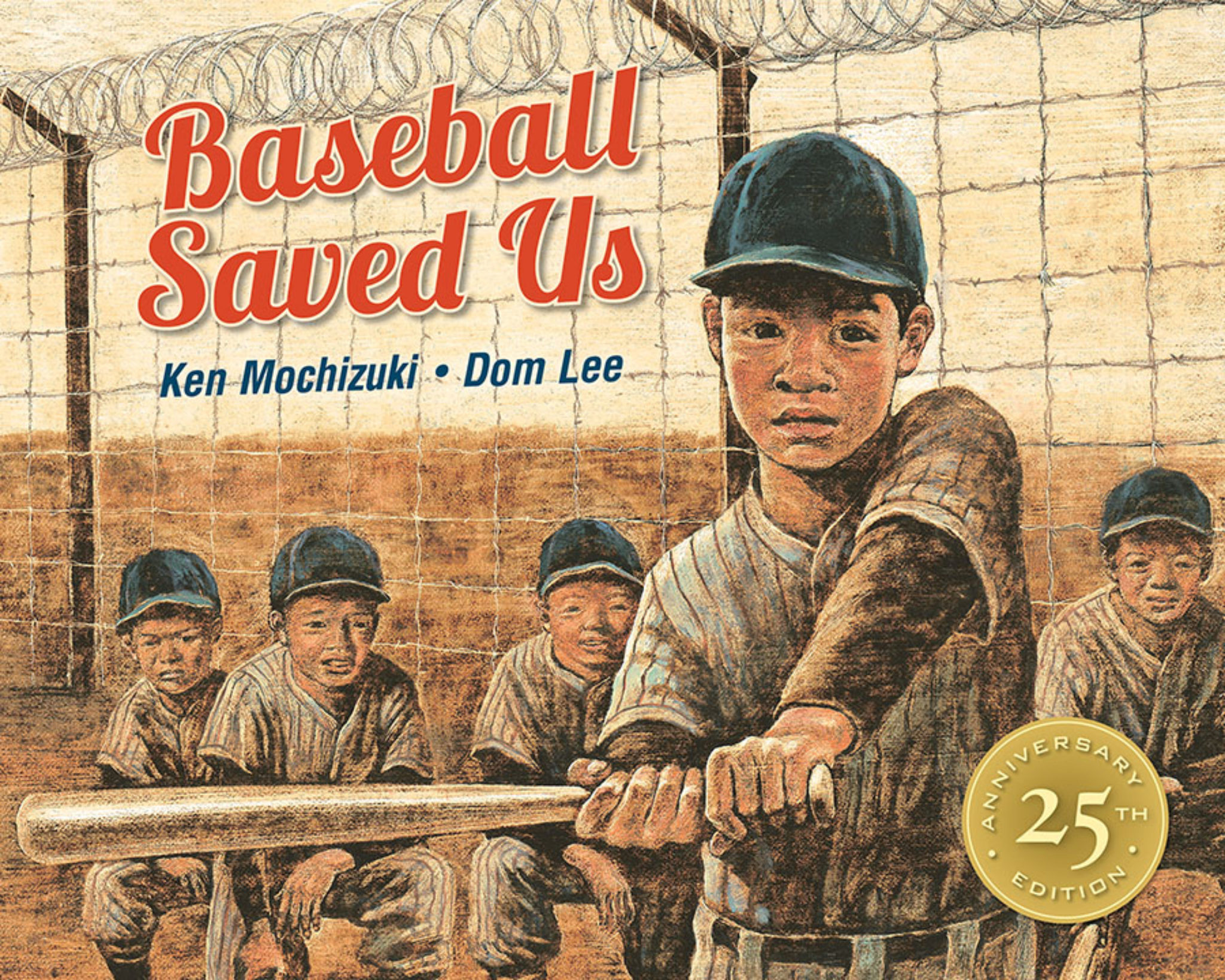
I vaguely remember reading Baseball Saved Us written by Ken Mochizuki and illustrated Dom Lee in Middle School, as a picture book, cover included below. It describes the experience of a Japanese-American boy who also ends up in an internment camp with his parents and the internees, led by his father, make a baseball field and provide equipment with which their children could play, and this saved them. Also I found the pdf for the text of said picture book., so if you wanna read that that’s below too.

Baseball Saved Us - Plugged In

2 Baseball Saved Us.pdf (webs.com)

Alright, so about my reading experience, I don’t really have massive responses to this type of reading. I mean, I would say how unfair it feels from Ichiro’s perspective, but I feel like that’s an obvious enough point to make. Of course he would feel like it’s unfair, everyone who was in those camps would find it unfair, for a vast amount of reasons. Anyway, moving on. I guess seeing Mrs. Yamada’s outright denial of obvious facts and information (calling anything that didn’t suit her belief that Japan has won the war as lies and propaganda, including letters from relatives asking for help) was … quite reminiscent of the world we live in today. Well, that’s still been a problem for a while now. Ichiro’s dad felt like someone trying to make it through the day-by-day life. In addition, bring it back to the whole unfairness thing, it felt like a damned if you do, damned if you don’t thing. Either you refuse to serve and get thrown in prison (with some shaming from those who did packed in) or you do and end up like Kenji with his leg blown off or like Bob, who couldn’t tell the tale. Also I know I keep coming back to things, but Mrs. Yamada showing up to the Kumasaka household with Ichiro in tow to show that her son’s “devotion to Japan” served him better than their son’s decision to choose was very, very … scummy. Just goes to show the depths of her self-denied delusion. Besides that, I don’t know, nothing’s popping up atm. Oh well, that’s what class is for!


The Jungle Casting

Hugh Jackman as “Jurgis”
Anne Hathaway as “Ona”

I would cast Hugh Jackman as Jurgis and Anne Hathaway as Ona in a movie adaptation for Jurgis. My main reason? I’m a massive sucker for how they worked together in the film adaptation for Le Misérables but I wish they had more time with each other, so here we are. Obviously this would be more preferable if the actors themselves were younger, because “She was so young—not quite sixteen—and small for her age, a mere child; and she had just been married—and married to Jurgis”, and Jurgis himself isn’t over a decade past her, but ya know, let cgi be cgi. Anyway, Hugh Jackman seems like the perfect guy to play a hardworking strong man to be a hopeful provider and also the perfect guy to watch it all fall apart.

As in how to adapt it, I would like the movie to be as close to the source material as possible, but I don’t make movies for a living, so how should I know what works and what doesn’t.

Anyway, thanks for reading, sorry if it sucks.